
ISTC hosts training in Almaty on using equipment measuring shear-wave velocity to better characterize ground conditions
ISTC hosts training in Almaty on using equipment measuring shear-wave velocity to better characterize ground conditions, Almaty, Kazakhstan | 12–15 October 2026
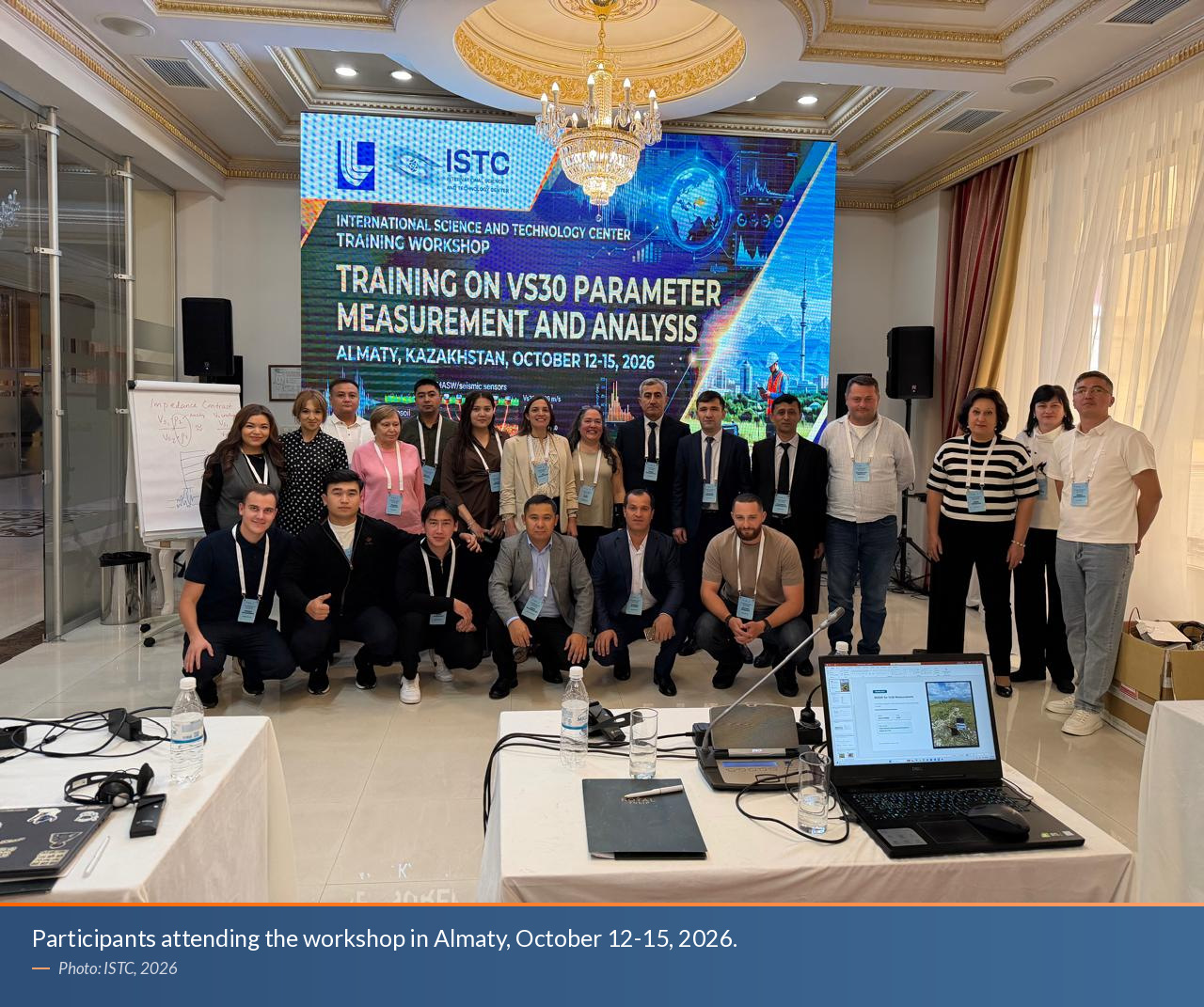
The International Science and Technology Center (ISTC), in collaboration with its partners, organized a training course on Shear Wave Velocity Measurement and Analysis in Almaty, Kazakhstan, from 12 to 15 October 2026.
The training brought together specialists from Armenia, Azerbaijan, Kazakhstan, Kyrgyzstan and Tajikistan, participating countries in the ISTC Seismic Network Expansion in the Caucasus and Central Asia (SNECCA) project. The measurement of shear-wave velocities at SNECCA strong motion stations will make the data from these stations immensely more valuable for pure and applied research that relies on this type of data.
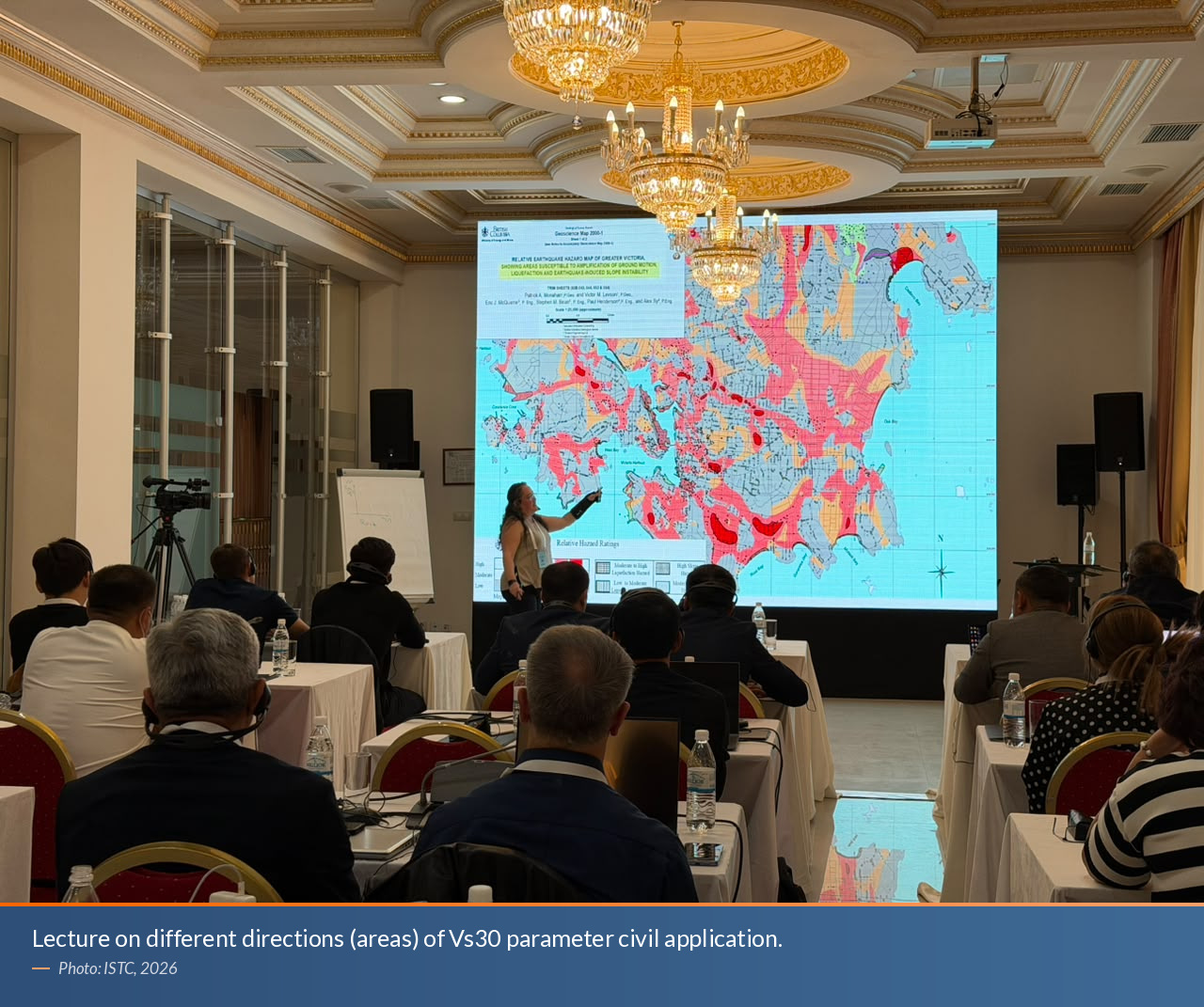
The programme combined introductory lectures and practical exercises on measurement of shear-wave velocity, analysis of results, calculation of the Vs30 parameter, and highlighting its application in seismic hazard assessments, earthquake engineering, seismic microzonation, and ground-motion models.
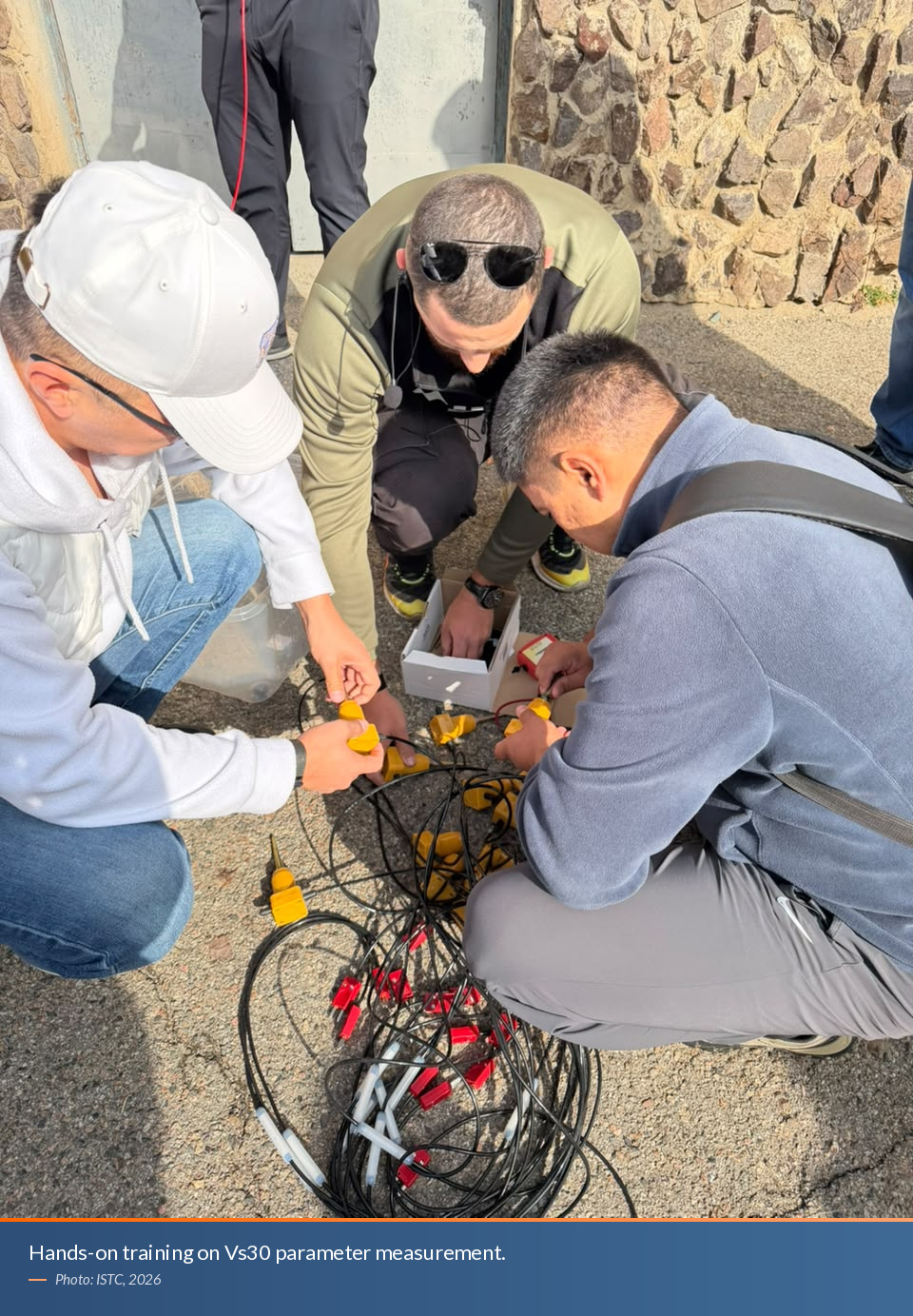
Vs30 represents the average shear-wave velocity in the upper 30 metres of the ground and is an important parameter for understanding how local soil conditions influence earthquake shaking. Reliable Vs30 data contribute to improved seismic hazard mapping and help identify areas that may be particularly prone to damaging earthquake shaking.
The training marks another step towards strengthening regional expertise and cooperation in seismic hazard assessments. Given the high seismic activity across the Caucasus and Central Asia, developing technical capacity and improving seismic data analysis are essential for enhancing earthquake preparedness and protecting communities and infrastructure.
Through the SNECCA project, ISTC and its partners continue to support the development of seismic monitoring capabilities and the exchange of scientific knowledge across the region.